
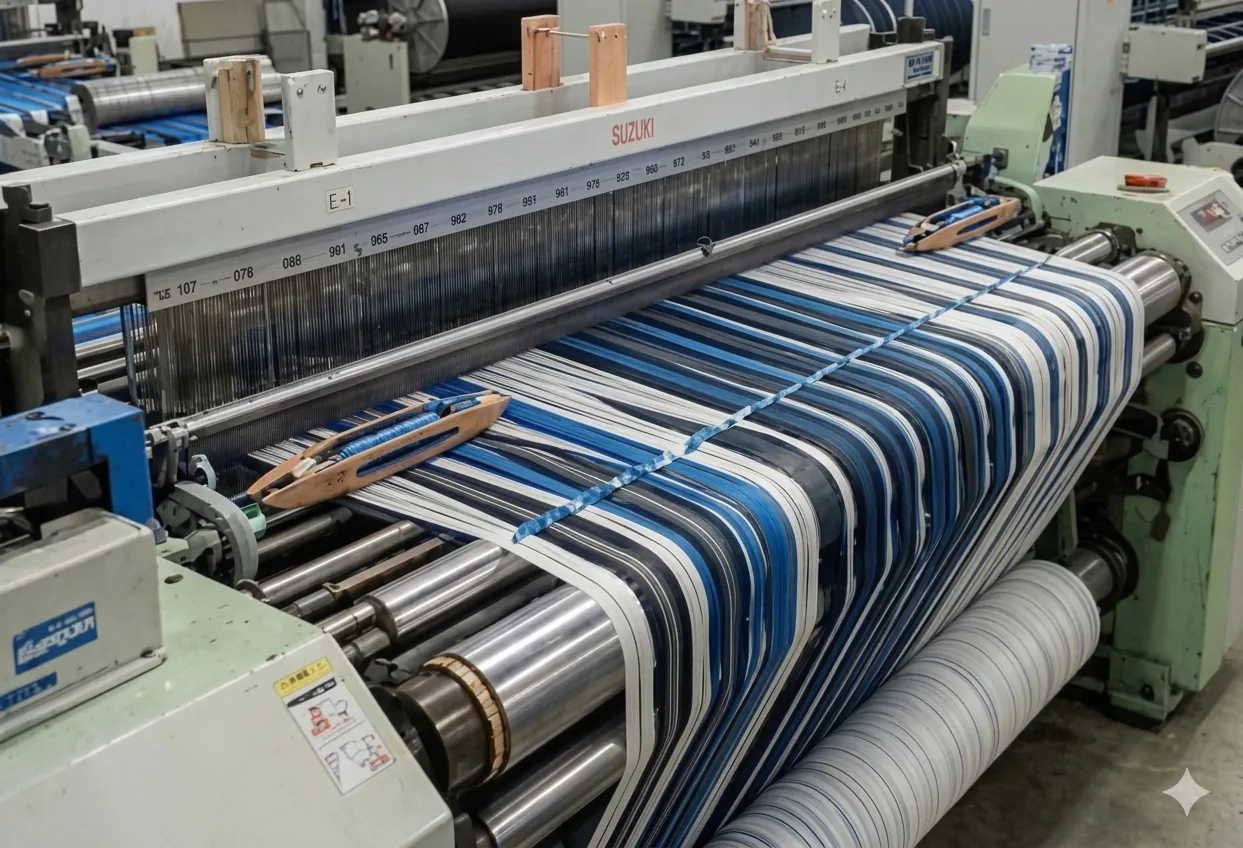
Understand the main stages of narrow-webbing production and the decisions buyers should document from yarn to finished rolls.
What is woven webbing?
Woven webbing is a narrow textile structure made by interlacing lengthwise warp yarns with crosswise weft yarns. Yarn choice and the way the yarns interlace contribute to the appearance, dimensions and handling of the finished material. The construction must be evaluated as a whole.
1. Define the construction and yarn
Start with the intended application, fiber, finished width and thickness, target color, hand feel and performance requirements. A supplier needs the desired construction and tolerances to determine feasibility; a fiber name alone is not a complete specification. The buyer should provide a drawing or reference sample and required tests.
2. Prepare yarn and weave
Yarns are arranged for the proposed construction and fed into the weaving setup. The weave pattern, yarn arrangement, machine settings and tension affect the resulting structure. Ask how the supplier identifies construction details and controls consistency throughout the order.
3. Finish, inspect and pack
Depending on the product, agreed processing may include color or finishing steps before inspection and packing. Review the sample for width, edge appearance, color, construction, roll condition and any required laboratory results. Agree on acceptable variation, test method and roll labeling before approving production.
Questions to ask a supplier
- What samples and construction information are needed to evaluate the inquiry?
- Which dimensions, appearance criteria and tests will be recorded?
- How are changes to yarn, construction, finishing or production location communicated?
- How will each roll be identified and matched to the approved order?
Reference: CottonWorks: Weaving Basics explains warp, weft and interlacing. The process description above is general and does not represent a certification or a guarantee for a particular order.
Explore woven webbing options or contact KVN to discuss your specification.