Compare common webbing fibers and learn how to evaluate samples for bags, apparel and sewn products.
Start with the application
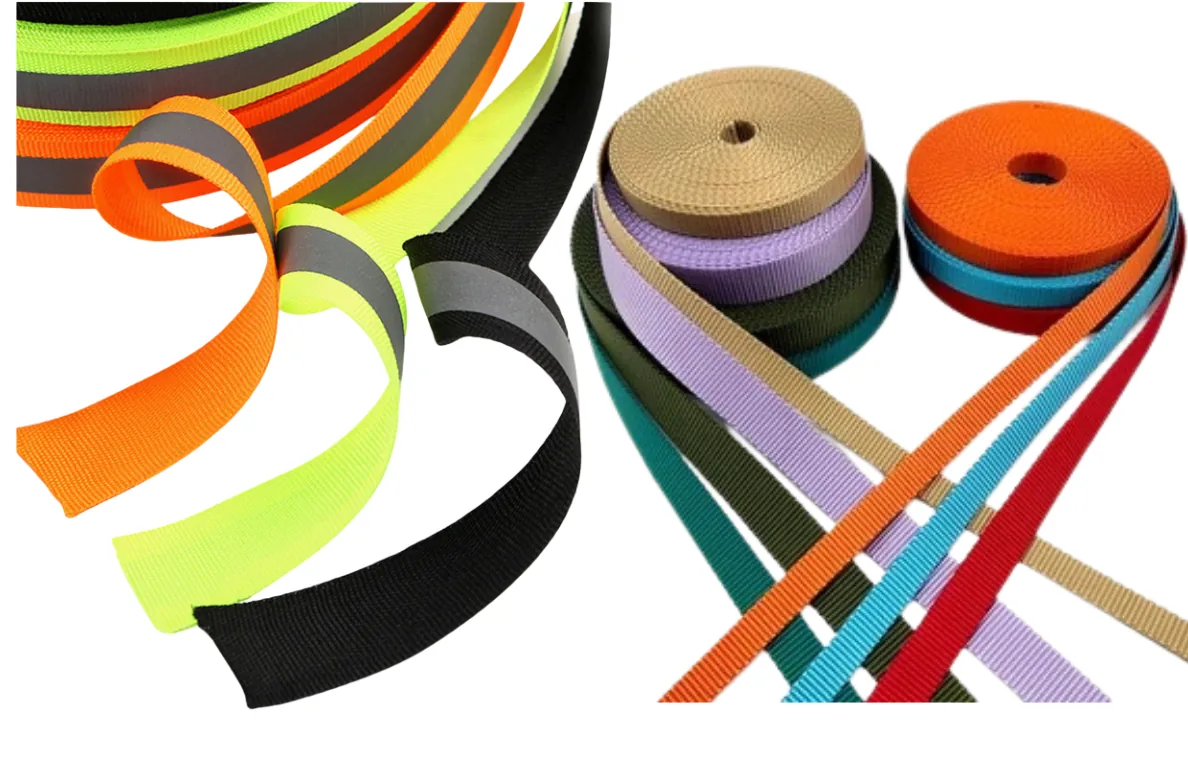
Polyester, nylon and polypropylene (PP) are common synthetic fiber options for woven webbing. Each can be made into many constructions, so fiber name is a starting point, not a complete prediction of strength, hand feel or service life. Choose using the full specification and samples.
Compare conditions of use
List exposure to moisture, sunlight, abrasion, heat, cleaning agents and skin contact. Discuss how each candidate behaves under those conditions with the supplier. Compare the same width and construction where possible; the weave, yarn, finish and dye can change the outcome. Require performance information or testing appropriate to the application instead of relying only on generic fiber comparisons.
Build a practical comparison
Request samples with identified fiber content, construction, finished width and thickness. Assess texture and drape, fit through hardware, sewability, appearance after relevant care, and any application-specific test requirements. Record the sample identification and accepted tolerances so a later production run has a clear reference.
Ask your supplier
Include the end use, quantity, colors, expected wear and any required documentation in your inquiry. Confirm material availability and applicable test methods for your selected construction.
Frequently asked question
Which fiber is strongest?
No fiber name alone establishes the strength of a finished webbing or sewn assembly. Compare test results for the exact constructions and the required test method.
Explore woven webbing options or contact KVN to discuss a specification.