Prepare artwork and specifications for woven logos, branded straps and patterned textile trims.
What is jacquard webbing?
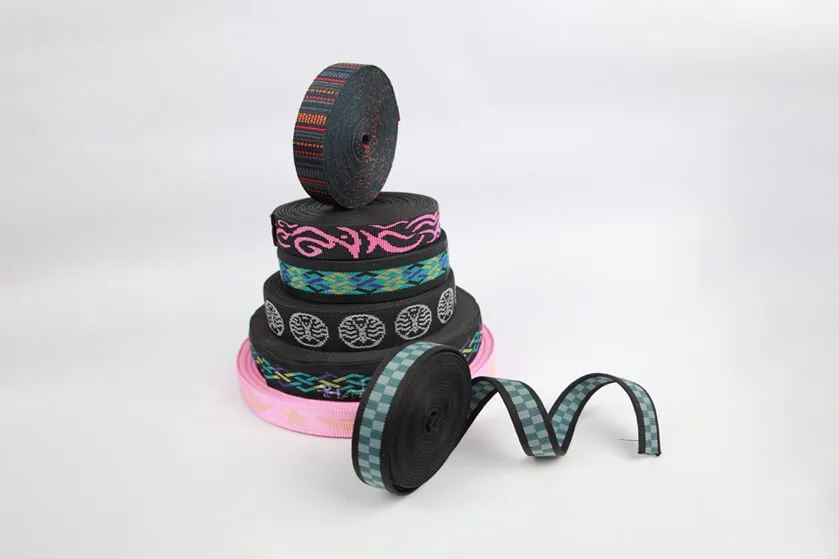
Jacquard webbing incorporates a pattern into the woven structure. Unlike a graphic applied to the surface after weaving, the design is developed as part of the weave. The visible result depends on yarn colors, construction, width and the complexity of the artwork.
Prepare artwork at actual size
Supply vector artwork when possible and specify finished width, logo orientation, repeat distance, text height and permitted clear space. Review narrow lines, small letters and color contrast at the actual product size. Confirm ownership and permission to use the artwork.
Approve a physical sample
A screen image cannot establish the final color, texture or legibility. Review a sample under agreed viewing conditions and inspect both sides, edges, repeat alignment and how the strap looks when sewn or threaded through hardware. Record the approved artwork and sample version.
Define performance separately
A woven logo does not by itself establish abrasion resistance, colorfastness or strength. Provide the intended use, required care and any test methods, then agree on suitable acceptance criteria.
Frequently asked question
Is a woven logo always more durable than a printed one?
Not necessarily. Durability depends on the specific construction, print method, use and care. Evaluate representative samples under relevant conditions.
Explore woven webbing options or contact KVN to discuss a specification.