
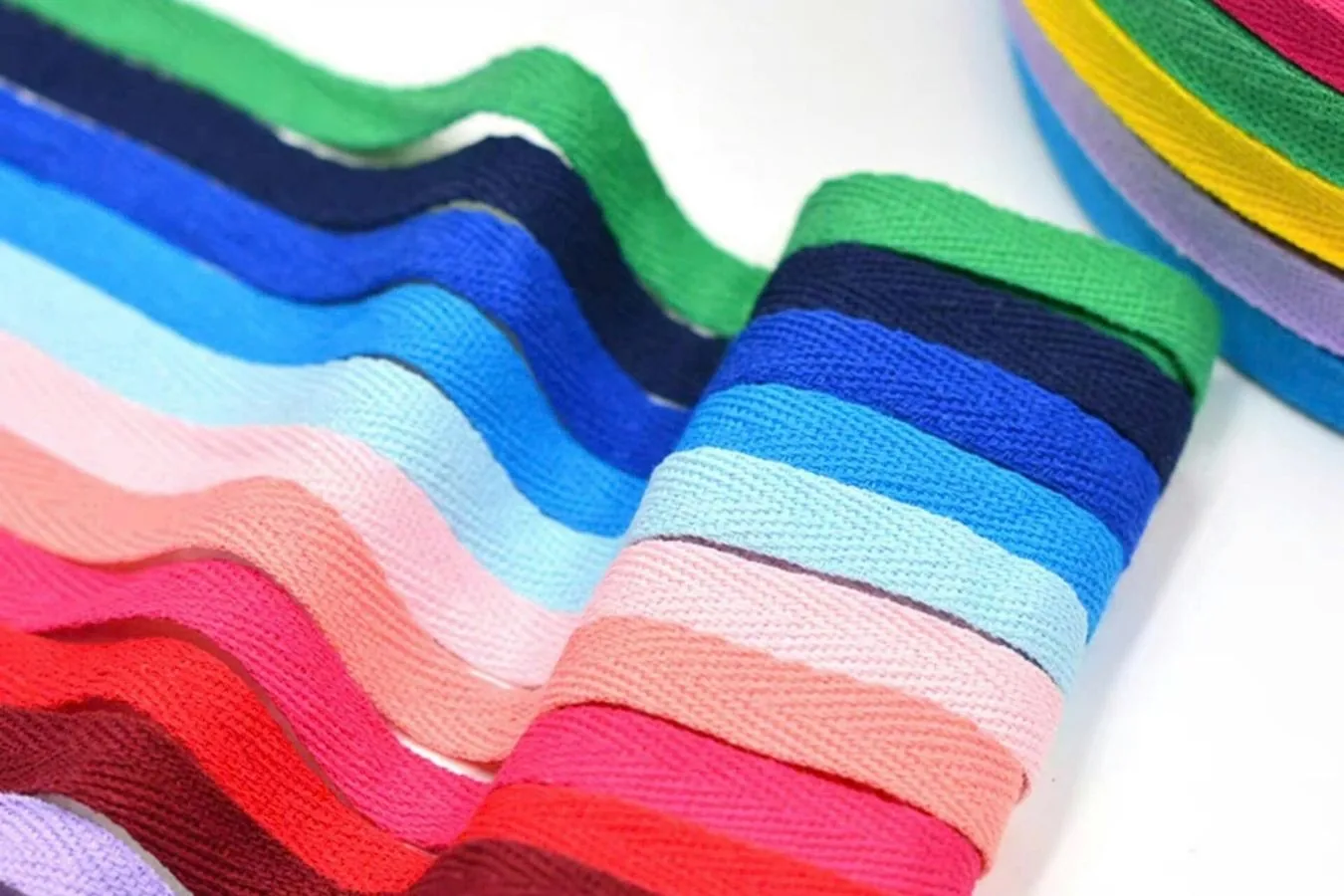
Binding tape can protect and finish an edge, but the finished seam depends on tape, substrate, stitch, operator setup and use conditions working together.
Start with the real use case
A binding that frays, rolls or pulls away may point to an unsuitable tape width, poor coverage, incompatible stiffness, incorrect stitch placement or a mismatch between tape and substrate. A trim choice cannot compensate for weak seam design by itself.
What to specify and evaluate
Check that the tape fully encloses the raw edge through curves and thickness changes. Confirm fold geometry, finished width and stitch distance. Match hand feel and thickness to the fabric or bag panel and the sewing equipment. Evaluate the edge after flexing, abrasion and care cycles relevant to the product.
Set acceptance criteria
For cotton or PP options, compare the specific sample against the substrate and finishing process. Specify color, width, material, tolerance and inspection criteria. Avoid assuming that a fiber category alone predicts durability or care performance.
Preparing a supplier inquiry
Provide a seam drawing or assembled sample, substrate details, target finished width, color, expected care and order quantity for a useful review.